
Home | Version 360 | Flying World | Look!| Read! | Xtras | Calendar | Links | About Us

ES
 

Sponsored Ad:


 4785m: World Record of Gain of Height at FlyK2 expedition!


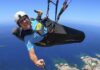
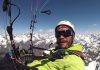
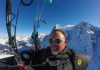
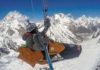
Marina (left) and Leroy (right), the FlyK2 expeditioners, high over the Himalayas

I was flying right in the middle of Hunza Valley, with the valley floor at about 2.000 meters. I was cruising at an altitude of around 7.000 meters, so there was a vertical space between me and the little villages of 5 km. What a view! After I completely soaked in this marvelous view I started my descent to recover from the high altitude and cold …” recalls Leroy, who flew a Skywalk Poison glider (DHV2-3).

The other pilots in the group those days –adventurer John Silvester, Nova's test pilot Toni Bender and PWC competitor Marina Olexina– were not able to fly so high but they all enjoyed the magnificent views of the Himalayas from the sky.

Team member Marina says that flying in this wild area of Pakistan, not far from the famous peak K2, is really extreme. “The conditions were very strong, the thermals took you to 6000m but it was very rough when you went out of the thermal” says the Russian female champion, who took part in the expedition with her main interest focused on shooting the experience with her video camera. She also left her comp glider Boomerang 4 at home and took a safer Gin Zoom (DHV2) with her to the Himalayas. During the weeks she spent at the Hunzu valley it was flyable only on 5 days, and a couple of times she managed to fly up to more than 6000m all alone, after an accident at launch forced Leroy to quit the expedition with a broken arm.
It was scary to be alone there, to make all decisions by yourself. But it's so beautiful and you can see many of the highest mountains of the world… It's a real adventure ”.
Despite the difficulties and harsh conditions they found, Marina wants to go back again: “ Maybe with more people, and maybe I'll be less focused on filming and more focused on flying, to try the altitude record again”.

Details of the expedition at www.fly-k2.com

Posted: September 5th, 2006

It was a wild adventure that took a few experienced pilots to climb the skies over the Himalayas in Pakistan, and it resulted in a new altitude record broke by Leroy Westerkamp (NL): 7685 meters, with a height gain of 4785m! The current world record of gain of height is 4526m set by Robbie Whittal in 1993.


 Risk of Parachutal stall in a wet glider

Following the accident suffered by a Swiss pilot –whose glider (DHV class 1-2, new) entered a parachutal stall after flying in light rain, and then crashed due to a full stall probably caused by brake input on landing– the DHV has issued the following warning:

“It is known that some canopies have an increased tendency to enter parachutal stalls when wet. It is also known that there are big differences in the reactions of canopies from different manufacturers – some fly quite normally when wet, as has often been reported by cross country pilots caught in rain showers, whereas others report that minimal rain is sufficient to increase the danger of parachutal stalls on their canopies. (...)

A pattern indicating which types of canopies are more prone to this problem has not been identified. Occurrences of parachutal stall when wet have been reported throughout all classes. It would appear that older canopies, where the cloth can absorb water more readily may be at higher risk, however, the current accident occurred with a new glider.

It is most important that pilots recognize this potential danger source and act accordingly. Should a pilot fly through rain, the area should be left as quickly as possible, the brakes must only be used sparingly, maneuvers which cause the canopy to fly with a greater angle-of-attack (e.g. Big ears) should be avoided, and should the conditions safely permit it, the glider should be flown accelerated by using the speed bar.

If a landing while in a parachutal stall is unavoidable, it is most important that the brakes are not used at all , even though this goes against all normal pilot instincts when approaching the ground. When a canopy flies in a parachutal stall, applying a few centimetres of brake may result in the canopy going into an uncontrollable full stall.
Should a parachutal stall occur when flying at sufficient height for a reserve deployment , this should be considered. The advantage here is that the reserve descent is more stable, and not prone to either stalling or diving as in a parachutal stall descent. The sink velocity of a reserve descent is generally lower than that of a glider in parachutal stall providing the reserve canopy is of the correct size for the pilot. The Swiss pilot reported a sink velocity of -6m/s for her canopy while in parachutal stall."

Karl Slezak, Safety Officer DHV


+Info: www.dhv.de

Swing investigates causes

The German paraglider manufacturer has carried out extensive test runs and simulations (with the support of the DHV and Dr. Stefan Müller) to identify the cause of deep stall in rain. “In general, there are two reasons why a paraglider may go into deep stall in rain:


Posted: September 5th, 2006

1. The first risk lies in the fact that the canopy weight increases if a glider is flown in rain for a lengthy period. The centre of gravity and angle of attack then shift, which is why it can result in airflow separation/stall. It is relevant here that if a glider absorbs more water (as older gliders do because they lose their water-repellent coating over time) and is closer to the deep stall limit because of its design and aging, less water absorption and thus weight increase will put the glider into deep stall.

2. When there is rain on the top surface of a glider, it can happen that so many water drops stick that almost the entire upper surface of the glider is affected but, even so, they “bead” so the surface is not wet through. This makes the top surface so “rough” in texture from the drop formation that the airflow over the top of the wing separates from the surface. This phenomenon has been known for some time from hang-gliding and gliding. With new gliders, the droplets are absorbed less quickly by the fabric. Thus, the newer a glider is, the greater the number of droplets caught on the top surface and the bigger those droplets are, the greater the risk that there could be airflow separation. (…)

Since the phenomenon is indeed very rare, but cannot be completely excluded, we are now attempting to establish the exact cause of the formation of droplets on the top surface by carrying out extensive fundamental research . At the same time, we are looking for technical solutions, e.g. a treatment for the upper surface of the fabric to minimize the risk of deep stall in rain.

It is the case in both of the above situations that the control travel and braking distance first reduce and then the deep stall is caused, mostly by alteration of the brake travel or angle of attack, e.g. by a gust or thermal.

Anyway stay away from rain with every paraglider…” Günther Wörl, Managing Director, SWING Flugsportgeräte GmbH

+Info: www.swing.de


 Only one task flown in PWC Fiesch- live report

+Info: www.pwca.org*Report available in French at www.parapente.ffvl.fr/equipe
*A video of the competition will be soon available on www.touslesdirects.com

Posted: August 15th, 2006

The third event of the World Cup Tour 2006 took place in Fiesch, Switzerland, in the famous Rhône Valley –in the middle of the highest peaks and ice valleys in Europe. Due to the bad weather, only one task was validated for the Swiss event with a maximum of only 200 points –not valid for the PWC ranking- and the first place to well-known Austrian pilot Christian Tamegger (Gin Boomerang 4). Charles Cazaux reports:
Fiesch is a really impressive place with many peaks over 3000m. I only heard about it from the French who went there some years before for an incredible World Cup: +15 m/s, -15m/s, north wind... We were a little bit afraid to spend time here! In fact, it is not so complicated; you just have to care about the meteo wind, the cold wind going down from the ice valley and the normal valley wind: an interesting mix! Martin Scheel, task setter, taught us a lot during the week with really professional explanation and meteo briefing.
Day 4 - 09/08/2006 - Task 1... Cancelled. Weather improved and Martin Scheel planned an 82 km task in the valley. Start of the race was really fast with 9,5 lift and 3400m cloudbase. At the middle of the race, 3km from the third turnpoint B09, the valley wind increased a lot, coming in altitude, and it became really hard to leave the lee side of each ridge in front and get on to the other side. Many pilots tried to go low and went into turbulent places: The organization took a safe decision and cancelled the task. Some pilots were still flying and landed in Fiesch where the conditions were better to land.
Day 5 - 10/08/2006 - Task 2: valid! Cloudbase was low and thermals not so strong this day. After 20 km race, 95% landed before the second turnpoint B17 and the validation distance. Four pilots were flying and Klaudia Bulgakow (POL, Gin Boomerang Sport) was the first to pass the validation distance followed by Marina Olexina (RU, Gin Boomerang 4), Christian Tamegger and Martin Pacejka still flying! Tamegger caught up with the girls and glided before the task stopped which was 2h15 after the start point opening (in order to prevent from strong wind or thunderstorms). Christian Tamegger won the task and the competition in Fiesch for the second time!

Overall PWC Fiesch:
1st Christian Tamegger (Austria) - GIN Gliders Boomerang 4
2nd Marina Olexina (Russia) - GIN Gliders Boomerang 4
3rd Martin Pacejka (CZ) - Gradient Avax
Winner woman: Marina Olexina
Winner Team: GIN VIP Team

Live report by
Charles Cazaux
After his good result in the Europeans, Charles Cazaux finished 7th on this event and is still in 12th position overall in the PWC.


 Leon, ready for the Paramotor Europeans

Only a few days before the beginning of the continental PPG championship, August 19 to 26th, competitors are gathering at the airfield of Chozas de Abajo (Leon, Spain) for the last training flights and terrain identification before the contest. The organization is confident that everything will be working perfectly in the area during the week; at the moment the weather forecast gives better conditions for the weekend –tasks will start on Sunday 20th- with calm air and clear skies. At the airfield there’s a special camping area for the teams and wi-fi connection to Internet. The teams hone their skills for this meet, where some of the best pilots of the world will surely fight fiercely to take one of the medals home. The Spanish team incorporated the best men in the country both in foot-launched paramotor and trike (PL1 & PL2), including world champ and recordman Ramón Morillas –a total of 12 pilots. They will have to face other powerful teams like the French, with the 2 world champions Mathieu Rouanet (PPG) and Vincent Ceccarelli (FR, solo trike), the Czech and Russians (also with world recordmen and champs) or the Brits. It will surely be an exciting comp till the last day!


+Info: http://www.rfae.org/~emc2006/

*Many of the Pilots are listed in www.flymicro.com

Posted: August 15th, 2006


 Paramania new website

+Info: www.flyparamania.com

Posted: August 14th, 2006

The manufacturer of reflex wings for paramotoring (and free flight) has a new attractive website where they have displayed not only the information about their popular PPG gliders –Action GT & Revolution- but also a good amount of useful technical stuff, pictures and videos to keep you interested while you surf around. The new site incorporates a News section to which you can send your own contributions via email to the Paramania Team. They promise to keep the site “subject to constant updating”. In the Downloads section you will find some online Movies and Manuals, and under Powergliders you will learn more about the reflex technology –and the wings. Information about new products released to the market will also be announced in the site. The latest addition is the Paramania Wing Tip Steering Kit, an easy add-on kit that can be used on any Paramania wing (Reflex, Action, Revolution & Action GT) to have better control and easier access over the wingtip lines, and for “smooth flat turns without affecting the trailing edge and profile of the wing”. The company also has a line of accessories including T-shirts, jackets, shorts, caps and neck warmers.


 Services for Pilots in Camping Vall D`Ager

The area of Ager in the pre-Pyrenees of Catalonia is well-known as one the best spots for XC flights in Spain, with a long history connected to hang- and para-gliding. For years the camping Vall d’Ager has been the headquarters of countless flying competitions and events, and also the meeting and lodging point for free flyers, so it’s no surprise that among their services they have incorporated some interesting options for pilots. Among them, the camping offers transport to the take-off and a modern retrieval system powered by the new CompeGPS tracking system ‘Broadcast’, which combines GPS technology and telephony. With this system it is possible to know the pilot’s actual position in real time and thus facilitate the retrieve, and at the same time adds high levels of security for pilots who choose Ager as the start of their cross-country flights.
Apart from these services and the landing area next to the camping –where there’s also a bar and a swimming pool- flyers and non flyers will find good alternatives to paragliding like mountain bikes available for rent or the new ‘buggies’ to go for a ride in the area. Not far, there's a lake where swimming, canoeing and fishing are the main activities on not-flyable days.
Vall d’Ager offers special prices for pilots so don’t forget to mention you’re one. And if sleeping in a tent is not your thing, there are some wooden bungalows as well.
The next paragliding event that will take place in this area is the British Open, from August 26th to September 1st.

+ INFO: www.campingvalldager.com

Posted: August 13th, 2006


 CEN Standard now applied to Paragliders certification

After 9 years of discussions and work to be accepted by the Flying Federations of the main European countries, the new Standard EN 926-2 (2005) is finally being applied for paragliders certification. In Switzerland, the company Air Turquoise (SHV test center) has already completed the certification tests of a dozen of gliders, classifying them in 4 categories (A, B, C and D) according to their more or less demanding flight characteristics for the pilot. In France, the homologations are in charge of Aerotests, the test lab of the FFVL. Even manufacturers that have always been closer to the DHV position (against the CEN standard) are now sending their new gliders to the CEN. Ozone is a good example, with their beginner's model Element (DHV1) now certified CEN A –“the most demanding category”- in S and M sizes.
This standard was surrounded by controversy ever since it was born, and even now it is not accepted by the German Hang and Para-glider Association, DHV, which believes that CEN-Norm testing is not an equal option for them. “German Legal Airworthiness requirements are more demanding in some categories than the CEN-Norm for paragliders” say at the DHV, and for that reason they will continue with their testing and certification program.
Polemics aside, we now have to pay attention at the effects of the CEN in the paraglider market and see if it really translates into a step ahead in the security of our flying equipments.

+Info: www.cen.li and http://www.ffvl.fr/

Read our article about the CEN testing here.

Posted: August 10th, 2006


 CORNIZZOLO CUP 2006


Gliding above Lecco to reach the Valcava turnpoint
(Photo: Damiano Zanocco) 

Posted:
August 7th, 2006

From July 23 to July 29, seven days of competition planned and seven days of valid task flown, 500 km of flights with distances from 43 to 106 km always in highly safe conditions thanks to an outstanding Meteo forecast service, despite the frequent late afternoon thunderstorms. These are the main results of the Cornizzolo Cup 2006 Open Italian Championship FAI2, disputed by 130 pilots of which 40 foreigners. The Czech republic pilot Radek Vacera won the Competition and the new Italian champion is Christian Biasi, first in the female category is the Swiss Karin Appenzeller and the new female Italian champion is the Swiss-Italian Caroll Licini. The usual high-level (Cornizzolo's standard) organization, settled also a big acro show in Lecco city on Sunday 30 with a lot of guest stars: Kung, Gallon, Montant, Boisselier etc... The Cornizzolo Organization, the FIVL (Italian free flight federation)  and the Italian Aero Club are officially proposing to the FAI responsible the Cornizzolo location for the Paragliding world championship of the 2009.


 Charles Cazaux beats 2 speed records!

The French pilot (1st French in the European PG Championship, 5th overall) has been exercising with the speed bar of his Boomerang 4 with great results, as he set new records of speed over triangles of 25 km and 50 km.
On July 23rd, Charles reached an amazing 41,15 k/h to cover 25 km! Coming back from his working day, Charles thought it was a good day to break this record and also a good opportunity to test his speedbar! He took off on a 100 meters hill and started the race close from a long ridge, in Aiguebelette, Savoie: he flew a first 25 km to test the air mass, went back to the start place and decided to make it. Charles says he didn't touch the brake line during all the course! He used only 70% of the speed of his Boomerang 4. After this, he was really happy to land just 10 meters from the door of his home place! Charles thinks that the conditions were not perfect for this record and that an average speed of 50 km/h could be reached. The current mark is 28.26 km/h flown by Patrick Berod in 1995.
Only 3 days later, Charles did it again – this time over a 50 km course that he covered in just 1h23m! This is what he wrote that day, at St Hilaire du Touvet: "July 26th, one more working day with a really warm weather... I am still waiting for my students who are making their last flight of the morning. In a few hours, if I have time, I will go flying with my Boomerang 4..." Two hours later, Charles was starting the 50 km course from close to the famous Dent de Crolles, then along the east side of the Chartreuse in direction to Granier... Low and close to the big cliff, it was no easy to push the bar... Conditions got stronger and stronger: he took an incredible lift that took him directly from 1700 m to 2700 m: 13m/s, too strong to turn! Then he crossed two times the valley of Grenoble in a straight line! The end was not so easy due to cloud coverage and big shades... But finally, the Boomerang 4 reached the goal line and landed in front of his paragliding school in Lumbin. The average speed was 36,07 km/h, 12 k/h faster than the previous record done by Primoz Susa (Slovenia) only 2 months earlier (24.1 km/h).

*See the current FAI World Records and record claims in http://records.fai.org/hang_gliding/
*The tracks are available on www.favoriteway.com (CompeGPS partnership), select "parapente".

Posted: August 4th, 2006


 World records in Slovenia


If they are ratified, the new records will appear in the FAI website: http://records.fai.org/hang_gliding/
Flight tracks can be seen in the OLC: http://www2.onlinecontest.org/

The European country has enjoyed epic days for cross country during July, which were enjoyed by some of the local pilots for incredible flights that will probably enter in the list of FAI paragliding records. On the 19th, Gasper Prevc (Gradient Avax RSF) flew 227 km out and return for a new record –the current mark is 213,8 km by Primoz Susa, also Slovenian- but on the following day this record was broken again 3 times! Klemen Peljhan flew 238 km, Mare Novak (Gradient Avax RSF) did 240 km, and finally the brothers Aljaz and Urban Valic (Mac Para Magus) set the new out and return record with a flight of 257 km that is now pending certification by the FAI.
Mare Novak also set a new mark in speed over a triangular course of 100 km, with an average speed of 31.11 km/h. The holder of the current FAI record is again Primoz Susa (25.5 km/h) with a flight done in June.

Posted: August 1st, 2006


+News in our previous Archive (July 2006): Petra & Luca European Champions; Avasport supports Euro-competitors; Homegrown Festival UK; The youngest pilot; Ramon Morillas PPG World Record; PWC Austria; Fly K2 expedition; Brauniger IQ One; PWC Brazil; PPG Open Leon; Safety advisory UP harnesses.
Click here to go.


ARCHIVE
September, 2006

+News in our previous Archive (July 2006): Petra & Luca European Champions; Avasport supports Euro-competitors; Homegrown Festival UK; The youngest pilot; Ramon Morillas PPG World Record; PWC Austria; Fly K2 expedition; Brauniger IQ One; PWC Brazil; PPG Open Leon; Safety advisory UP harnesses.
Click here to go.

*See an index of all the published news in this (and other) section(s), and links to our Archive pages in READ!


If you want to reproduce any information or images from this website, you must ask us at: info@ojovolador.com first. Thank you!
© Ojo Volador 2002-2005.
All rights reserved. Please respect the rights over intellectual property of this website


Home | Version 360 | Flying World | Look!| Read! | Xtras | Calendar | Links | About Us

All the information and images published in this website are property of Ojovolador.com unless stated otherwise.
Reproduction of any part of these contents (info, graphics & pictures) by other website or media is strictly forbidden,
unless specially authorized by Ojovolador.com.
If you want to share this information, please pass the Web address (URL) of this page.
© OjoVolador 2002 – 2007
Please respect the rights over intellectual property of this Web site.

 Top Paragliding Sites