|
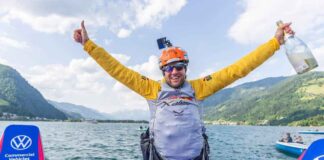
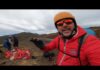
Patrice
Quillet,
holder of the Spanish and European
distance record: 280.1 km
|
He is 39 years old and made history on August 15th when he flew
280km from Piedrahita, the famous cross-country start point
in the Gredos mountains, smashing the previous national distance
record obtained by Steve Ham only one month earlier (244km).
|

Photo:
David Casartelli


Posted:
October 25th, 2004 |
Patrice
Quillet lives in Paris, which means he has a strong motivation
to fly as pilots of this flat region frequently have to travel
more than 1000 km to enjoy a good flying weekend. When they don’t
go so far, they must hone their skills to climb from the low takeoffs
near Paris, not an easy task but one that forces them to develop
technical abilities if they want to stay in the air (let’s
remember that Julien Dauphien broke the French record flying 270
km from this region).
Patrice learned to fly in 1995 in the center of France, in the
school ‘Espace Volcano’. He is not a dedicated competitor
and he only follows certain competitions, mainly because of the
nice atmosphere and the chance to make good flights, but what
he really likes is open distance: "For me it’s
the most beautiful of all flights. The horizon in 360 degrees;
the birds as route companions and the tactics of flight that makes
you think all the time about the rest of the flight”.
To calm his thirst of kilometers, aside from some flights in the
Alps during national competitions, in the last five years Patrice
has traveled to Piedrahita at the beginning of August. It was
during his last trip that Patrice broke the Spanish distance record
with a 280.1km-flight. Here, he tells us about the keys of his
success...
•
What flight conditions did you find on the day of the 280 km?
Southwest wind of 25-30 km/h, maximum cloudbase at 4000m,
4/8 of clouds and thermals up to +5 m/s.
•
What was the most difficult moment of the flight?
The two first hours were, I think, the most physical of my whole
life of paraglider pilot. As I took off early the thermals of
Piedrahita were still not well developed. I had to fight hard
to stay in the air, with a maximum speed of 5 km/h facing the
wind. But I believe that it was this wind what disorganized the
low air level, thus helping the thermal activity to start.
•
When did you start thinking of the record?
By km 200 I knew I was going to break the Spanish record, later
I knew that the European record with no turnpoint was also to
my reach. In the flatlands of France, we usually count only the
straight distance from takeoff to landing. It is easy; just draw
a line on the map...
•
What conditions or previous preparation are necessary to undertake
such a long flight?
Well, regarding preparation it was a total disorganization! I
had flown 8 hours the previous day, a 136 km flight that broke
my old record of 135 km of 5 years ago. On August 15th we arrived
a bit late at the takeoff of La Lastra del Cano, after a breakfast
consisting of a cup of tea and a piece of cake. I had two cereal
bars in my pocket. I ate one at noon and the other at 4 pm. As
for the maps, I fly with a Michelin of 1: 400,000 in the pocket
of my harness, but in flight I go where the wind takes me. My
GPS points to the takeoff and I see the number of kilometres accumulated.
The meteo analysis is now better in Piedrahita since there is
Internet access. But it is essentially a question of luck. We
put ourselves in the air and there we decide what to do, and tell
each other. A little practical detail to keep in mind for this
type of flight: you piss in the air or you’ll have to hold
it... It can be a determining factor to finish your flight so
you have to arrange this, and it’s not easy.
|
|
•
What was the best moment of the flight?
In a thermal at 7 in the afternoon. I could breathe and finally
enjoy the landscape that it had changed a lot from the takeoff.
I was sure that I’d beat the 242 km of the previous record.
•
What did you feel when you landed?
The strangest thing was that I did not believe it. It seemed unthinkable
to me. True a great happiness.
•
What other long flights have you done and where?
The previous day, 136 km from Piedrahita; in South Africa, in
Kuruman in 1999 I did 135 km; and some flights of 100 km over
the flatlands, in France.
•
What do you like about Piedrahita?
The tapas and the beer! I mainly like the relaxed atmosphere,
where young and old people go out by night. The Spanish rhythm
suits me well.
•
What is your next challenge?
With some friends of Paris we have the hope to someday pass the
line of the 300 km.
*I would like to add that on this 15th of August, my friends flew
too. Thierry suffered a spin over the takeoff, Wim had a stall
when entering a thermal, and Marc decided to leave it and didn’t
launch. I flew together with Olivier Legrand from km 100 to km
200. He landed at km 237 and it was Anne, his wife, who did our
retrieve. Thanks to her for following us the whole day in the
car.
|
|
Windy
Europeans in Greece |
|
For
12 days, 140 pilots fought the European Paragliding Championship
in Kalavrita, where the young Swiss pilot Christian Maurer
(Advance Proto) took the first place, followed by British champion
Bruce Goldsmith (Airwave Magic FR). Tomas
Brauner (CZ- MacPara Magus) and Phillipe Broers
(BEL- Air Cross Ultima 3) shared the 3rd place. Petra
Krausova (CZ- Mac Para Magus) is once again the Female
Champion. |
The
wind made conditions difficult sometimes and a few accidents
occurred on the 5th task, one fatal, opened a debate about the
security criteria applied by the organizers to set the tasks
and the responsibility that every competition pilot has regarding
his own safety. On the other hand, there are pilots who thought
the conditions were very good with only some “technical”
days, as the local weather was highly influenced by valley winds,
sea breezes and convergence.
The Europeans started with promising conditions during day
1, with a 60.5 km task that 70 pilots completed. Day
2 was more difficult, a task of 61.1 km with 3 turnpoints
that 78 pilots managed to complete. The organizers say that
many pilots “were surprised” by the number that
goaled.
Day 3 is more unstable and an 89.5 km task
is set: a 20 km start cylinder, an out and return and then a
50 km run towards Tripoli. This time only 24 pilots make goal,
those who work together with their team mates.
On the 4th day the wind makes it impossible
for a task, and the same happens until day 8, when a 67.7 km
task is set. Conditions are not easy and the wind forces the
pilots to search for thermals on the leeside of the mountains.
The next day the 5th and last task is set,
an 80.2 km race. 17 pilots make goal but there are a number
of accidents that put a sad end to this event. Spanish pilot
Carlos Izquierdo
crashes violently over mountain Falkos and Philip Broers (3rd
in the general results) lands next to him to help. Despite his
efforts to keep him alive, when the first rescue team comes
by land about 2 hours later Carlos is deceased (the helicopter
came another half an hour later, according to those who were
there).
Near there, his teammate Xevi Bonet suffers an emergency and
deploys his parachute, but he lands unharmed. Two other pilots
were injured in accidents, and comments of some competitors
suggest that the rescue procedures did not work as announced
by the organization of the event. A member of the Spanish team
also says that the organizers pushed to set a task "ignoring"
the weather forecast for that day and putting the pilots at
risk. The debate should make us all think about the responsibility
we as pilots have to make our flights safer, and that of the
meet directors. Security should always come first.
The
Spanish paragliding community has been struck by the news of
Carlos Izquierdo's death. He was one of the
first paragliding pilots in the country and one of the first
to compete at international
high level events in the early 90s; maybe one of the most experienced
pilots in Spain and appreciated by all the people who knew him.
He had been away from competitions for some years but had returned
a bit more than a year ago, obtaining good results. Carlos was
known as a pilot who never took special risks, which makes his
accident even more difficult to understand. Our feelings are
with his family and friends.
|
|
**
ST HILAIRE'S FESTIVAL 2004 - FULL REPORT!!
**
If you still didn't read our detailed articles
about this year's Coupe Icare, go to our READ section. You'll
find two articles about the biggest event of free-flight in the
world; "S-H, As good as ever" is a
general account of the Festival's weekend, and "Icaro's
news" is a summary of the many new products for
paragliding and paramotoring brought by the manufacturers to the
fair. Click here to go! |
| Antoine
Montant – The Acro star of 2004! |
He’s
23 years old and has been doing Acro competitions only for the
last 2 years, although he’s far from new to paragliding.
This French pilot is the rising star of the competitive Acro scene
and has ended in the 3rd place of the world ranking of Acro pilots
(FAI) this year, surprising the public and the jury with his clean
style in the air mastering his small Gradient Avax RS. Keep an
eye on this talented pilot, he will surely give more reasons to
know him better!
1st Photo ©
Sky-Dreams.com |
When
Antoine was 9 years old he and his brother started flying under
the instruction of their father. He assures he became “really
independent” at 16, and soon started trying some
more radical tricks as he spends most of his time “in
the sky”, when he is not working as an ski and snowboard
instructor.
Now that the season is over, Antoine has time to enjoy his successes
and tells us why he’s so motivated with the Acro competition:
I enjoy it for the good spirit among all the pilots.
It feels like a big family and I hope it will stay like that!
I think we will have more acro comps in the future cause everybody
like that, it's a good show, and there is more people every
year. Hopefully we will have more helico drop like in Norway
or boat pulling ‘cause it's more simple for the comp and
better for the show.
-How do you feel about your results?
This year was very good for me because I trained all
the spring to be ready, I won 2 comps and I’m third on
the annual world ranking so I’m very happy about that.
-How’s the Acro competition growing?
In 2 years we will have a world championship, it's good
for the recognizing of the Acro but I hope it will be not too
serious and I hope we could keep our identity and our spirit.
-Tell
us about your gear…
I fly a Gradient Avax RS Acro 22m, it's a very fine
glider with very short and light brakes. I love this glider
for the precision, I can do every manoeuvre but it requires
a long time under this wing to feel really good.
-Where do you usually fly?
My favorite site is the Saleve, close to Geneve, but
I fly in all the Alps and I have a secret spot for Acro training,
it's like a little Organya (Spain).
|
-3rd place in Vertigo Voss (Norway, June)
-1st place in Acroaria (Italy, August)
-6th place in Vertigo (Switzerland, August)
as member of the “Salève Acro Team”,
with Patrick Lachat (CH)
-1st place in Acrolac (France, August)
*He is also the recordman of Corsica island. |
posted:
October 11th, 2004 |
|
| Bruce
Goldsmith, British Champion for the 3rd time |
The last event of the British
PG season held in Castejon de Sos
(Spain) on September 12-18, saw the victory of the skilled pilot
and Airwave’s designer Bruce Goldsmith (and his Magic
FR), who had a comfortable advantage of more than 2000 points
over his closest competitor after winning the 3 British Open
Comps of this year. The new Champion so closed a brilliant season
and got the title for the 3rd time: he was also British Champion
in 1998 and 2001.
The Competition in Castejon de Sos was a great success, with
120 competitors including the Spanish and Polish
Teams who used it as a training event for the up and coming
European Championships in Greece. Four tasks
were completed with task distances of between 46 and 67km. The
weather was good with nice racing conditions and many pilots
in goal on 3 of the 4 days.
“Calvo, the meet director, paid particular attention
to making the competition as safe as possible, and is to be
commended for his excellent work in this area, which included
two safety briefings every day for all pilots. The most serious
injury during the whole competition was when Verina, Calvo’s
wife, fell off a horse and hurt her neck!”, said
Bruce.
Overall
results for the British Championships:
1st Bruce Goldsmith - Magic FR
2nd Mark Watts – Avax RSE
3rd Adrian Thomas - Magic FR
The
British Open in Castejon:
1st Bruce Goldsmith – UK
2nd Rafal Luckos - Pol
3rd Xavi Bonet - Esp
|

posted:
September 27th, 2004
|
| Will
Gadd flies across the Grand Canyon |

“It
was amazing, but I don’t need to do it again”
says the extremist pilot, who has already flown across the Andes
mountains between Chile and Argentina, and crossed USA on a
paramotor. “This is the first time anyone has flown
over the Grand Canyon on a paraglider, hangglider or any ultralight
glider for that matter. So I’m very happy with the accomplishment
but I can see why nobody has done it before!”
Info
+ photos: www.redbull.com
|
The world
record holder of PG distance Will Gadd (CA) has become the first
ever to cross one of North America’s most well known landmarks,
the spectacular Grand Canyon, on his paraglider.
On September
10th, Gadd launched his Gin Zoom 24 km southwest of Grand Canyon
Village using a truck-mounted tow system, then rode the rising
thermals to an altitude of 5456 m before gliding across the
16 km distance of the Canyon. During the flight, Gadd braved
turbulent swirling winds, strong up-and-downdrafts and near
freezing temperatures. To gain altitude, he even hitched a ride
on fast-moving “dust devils” reaching lifts of more
than 8m/s. The key was to climb high early and always stay above
the rim of the Canyon. Not only is the area above the Canyon
restricted airspace, if Gadd fell below the rim he would run
the risk of having to crash land in the mile-deep Canyon, one
of the harshest environments on earth.
"It
was absolutely the wildest flight I’ve ever had,"
said the 37-year old Canadian. "The air was very powerful
and I was nervous because it could be fatal to land a paraglider
in the Grand Canyon’s winds. And even if I survived the
landing, I didn’t know if I’d be able to get out."
Gadd’s
flight across the impressive Canyon lasted three hours, during
which he traveled at an average speed of 56 kmh. The Canadian
then had some trouble finding a safe landing zone but eventually
touched down in a field approximately 16 km north of Jacob Lake,
near the North Rim of the Canyon.
Gadd says
a lot of planning and teamwork contributed to his success. In
particular, fellow pilot Chris Santacroce provided air support
from his motorized ultralight plane, keeping tabs on Gadd and
ensuring he didn’t fall into restricted airspace. On the
ground, Gadd’s friend Josh Briggs stood on alert with
water, food, and technical climbing gear in case Gadd was forced
to make a landing in the Canyon. The team also spent more than
a week monitoring wind and weather conditions before attempting
the flight.
posted:
September 27th, 2004
|
| DVD
– The Flying Babouches |

'The Flying Babouches' is
a 190 minutes production well worth its price and that any pilot
will certainly enjoy for a long time.
Available at PG shops and at the online shop
www.pxp.es.
|
Winner
of last year’s prize of humor at St. Hilaire’s Festival,
the most important showcase for aerial films in the world, “The
Flying Babouches” is now available in a DVD packed with
very interesting extras.
The film is an entertaining, easy-going story about 3 lost travelers
who are recruited to become the stars of a paraglider show in
Morocco. The problem is they have never seen a glider before
and they only have a few days to be ready... The newbies are
as clumsy as they can be under the wings, but Moroccan magic
will play its game to make them become addicted to flying, and
also excellent Acro pilots! Although simple, the film is effective
in keeping you amused during 20 minutes and it's also the vehicle
for a good display of paragliding aerobatics, performed by Antoine
Boisselier, Guillaume Broust and Bruno Bourdat. The film is
not an expensive production like others seen in Festivals recently,
but has character and it’s well edited, keeping a good
rhythm and spiced up with good touches of humor, especially
during the first part (learning to fly!).
The only problem with it is that’s in French language
and the translation to English and Spanish miss part of the
narration. The director, Guillaume Broust, told us they will
try to make a new version with a more accurate translation soon.
In any case, the best of this DVD is that you don’t only
get “The Flying Babouches” but also a good collection
of films that include a short and interesting documentary about
Acro, “From freeflying to aerobatics”, starring
Richard Gallon (PG) and Yann Floury(HG); a film about last year’s
acro competition ‘Vertigo’ with some of the best
moments captured there; the making of ‘The Flying Babouches’;
and two sequences of flying, one in Morocco and one over the
Mont Blanc.
posted:
September 27th, 2004
|
| XCEARA
2004 – Record-hunting again! |
On
November 20 to 27th 2004, the area of Quixada,
in North Brazil, will see an invasion
of top pilots to battle it out for new FAI distance
records in the classic cross-country event XCEARA.
In past events Frank Brown set the South American Paragliding
Record of 305 km, while Mario Alonzi took the
hang gliding record to 432 km. Louise Crandal
smashed the FAI female world distance record with 241
km and Richard Westgate set a new FAI tandem
record.
For 2004, organizer Chico Santos is so confident of huge mileage
that he's putting on a PLANE RETRIEVE to ensure pilots get back
to base. Places are restricted to 50 pilots only, and the registration
fee of U$600 includes a whole weeks' accommodation,
airplane retrieves and so on.
The event is being sponsored by Cross
Country Magazine. 'It's the purest form of XC competition
- turn up, take-off and spec out!' said Cross Country's
editor Ian Blackmore.
More
info at www.goup.com.br
and soon at www.xceara.com.br
posted:
September 27th, 2004
|
|
| New
Calendar - Fly Forever 2005 |
Renowned
photographers Jerome Maupoint, John Heiney, Jimmy Hall and Christian
Pondella have teamed together to shoot an exclusive set of images
for Cross Country's 2005 Fly Forever calendar.
“From the burning oranges of Monument Valley to the
peace of the Swiss Alps, from hang gliding loops over Norway
to XC flying over the English flatlands, these images capture
everything that's good about flying. Printed in a giant 420
mm x 300 mm format, they are sure to keep you fuelled through
the 2005 season” say at the XC mag.
A 20% of the proceeds of the sales of this calendar will be
donated to Flyability, the British charity
that gets disabled people flying (www.flyability.org.uk).
You can buy it online at
www.xcshop.com
|

posted:
September 27th, 2004
|
News
in our previous Archive #11:
Mediterranean crossing by paramotor; New Spanish + Greek records; News
at El Yelmo Festival;
Summer courses; New Book; Rewards for good pilots; Records in Europe.
Click to go!
Get
the latest news of the paragliding / PPG world and our website updates
through our informative Newsletter, sent directly to your email every
month. Non commercial, and free!
[*We
keep all our susbscribers data as confidential information and we do
not give it to third parties]
To
subscribe, fill in the form that will appear when you click here. We
will send you the latest Newsletter as soon as we can.
|