Instagram@ojovolador.parapente


Product news
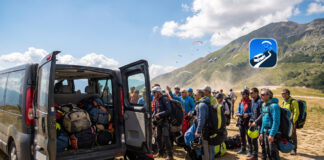
GlideLoop: the app that brings order to shuttle runs to launch...
GlideLoop, a browser-based web app by Italian pilot Stefano Madeddu, organises shuttle runs to launch for clubs, schools and operators, with more than 10,700 take-offs from Paragliding Earth.

Mike Küng launches MK-Flightsystems: parakite evolution is born from groundhandling
Groundhandling master Mike Küng launches MK-Flightsystems, a parakite brand with the Spike, Supra and Sicario wings plus dedicated harnesses.

UP Paragliders Cerro: the lightweight 2-liner we saw at the Coupe...
Among the new wings drawing the most attention at this year’s Coupe Icare was the UP Paragliders Cerro, the German brand’s new lightweight two-liner....

In the air right now
Test bench
What we are flying right now and when each piece of content will be out: written review, reel or tutorial video.

UP Makalu 5: easy performance for progressing pilots
We fly the UP Makalu 5, a low EN B that combines a friendly character, excellent thermalling and fully sheathed lines: an ideal wing for progressing pilots.
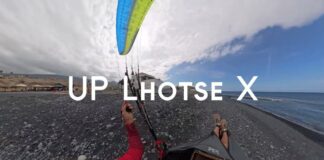
Review: UP Lhotse X – Lightness with character
We test the new UP Lhotse X, a lightweight EN B that delivers high-level performance without sacrificing the comfort and portability hike & fly pilots look for.
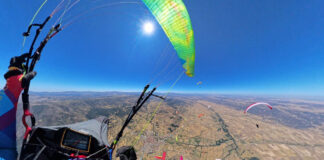
BGD Base 3: the art of flying fast (and relaxed). A...
We fly the new BGD Base 3 in depth: an EN B that searches for the perfect balance between safety and performance, and flirts with the C class.
Reviews
Review: UP Lhotse X – Lightness with character
We test the new UP Lhotse X, a lightweight EN B that delivers high-level performance without sacrificing the comfort and portability hike & fly pilots look for.
BGD Base 3: the art of flying fast (and relaxed). A...
We fly the new BGD Base 3 in depth: an EN B that searches for the perfect balance between safety and performance, and flirts with the C class.
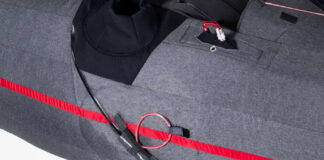
Genie Race 5 safety notice: GIN warns of a possible fault...
Gin Gliders has published a safety notice for the Genie Race 5 harness: during an internal quality inspection, the brand identified a possible manufacturing...
Competition

Andy Aebi wins the PWC Brazil 2026 in Baixo Guandu after...
Andy Aebi (Niviuk Icepeak X-One) wins the PWC Brazil 2026 in Baixo Guandu. Violeta Jiménez tops the women's ranking and Niviuk wins the team title.


Videos
Review: UP Lhotse X – Lightness with character
We test the new UP Lhotse X, a lightweight EN B that delivers high-level performance without sacrificing the comfort and portability hike & fly pilots look for.
Piedrahíta 2025 Spanish Tandem and EN-B Championship: where youth and experience...
The Spanish Tandem and EN-B Paragliding Championship has left us with a taste of legend and a promising future. Beyond the four tasks flown...
Paragliding flight plan: make progress in your flying with a good...
Have you ever arrived at launch without knowing exactly what you were going to do in the air? Many pilots — beginners and advanced...

A community flying since 2002
46.000Facebook followers
20.454Instagram followers
15.800YouTube subscribers
24years covering free flight