


Pro design EFFECT II

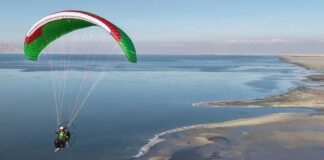
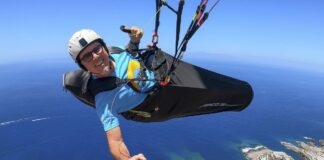
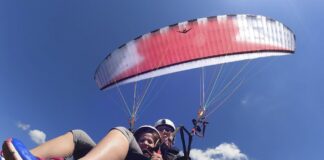
The new Effect is aimed at beginner and intermediate pilots, and has been just certified DHV 1-2 (in accelerated flight only). Compared to the first Effect, the Effect II offers lighter weight and smaller packing (5,8 kg for the smaller size and 6,9 kg for the L). It also has an easier take-off behaviour and a more efficient speed-system with less presure, according to Pro-Design. The speed range goes from 22 to 51 k/h and it is available in 4 sizes, and in new colors.


Nova Aeron

 
Nova Aeron (advanced intermediate) & Radon (advanced)

The intermediate glider of Nova, the AERON, was the result of the process of development of a new perfo glider for their range, the Radon. One of the protos they made had less cells, less lines, and the safety potential of a class 2 model, so the company introduced some improvements in the airfoil and cell-width to get an outstanding performance for a perfo glider, but with the security of a DHV 2, according to Nova. The Aeron was born. It has small intakes across the centre of the wingspan instead of closed cells, to offer easy take-off characteristics. The handling was tuned to be “performance oriented”, with good feedback on the brakes, that make it “a pleasure” to climb in weak thermals, while in strong lifts or turbulences it is said to offer great stability and to keep its performance. “Specially in those very windy and turbulent conditions, the AERON showed it's true potential: it is a racing machine which can take you further to new limits, but it also offers you the safety and confidence of a safe DHV 2 wing”, say Nova designers. The Aeron broke a double distance record of 281 km to declared goal right after its certification, in the hands of Peter Simonics and Szilard Forgo, and it also won this year’s Spanish Championship in Serial Class, piloted by Emilio Tejeda.

The Radon became what the Aeron proto was meant to be: a perfo / advance, DHV 2-3 glider with a wider speed range. To achieve this, Nova did some modifications to the Aeron, like a new brake line transition system (BTS), which keeps the brake line tight in normal flight to have “the best feeling and feedback” whilst still having a clean trailing edge, and so the glider is very performant and fast when pushing the speedsystem, according to Nova. The Radon is also equipped with thinner lines, and the brake line geometry has been changed for an optimised (and advanced) handling. “The RADON is a wing for very engaged pilots, flying comps or competing in the cross county discipline. The shorter brake travel and more precise reaction on brake input need a more advanced pilot. The wing is overall more dynamic and powerful”. Amazingly, the Radon passed DHV certification in class 2, having only a 2-3 in assymetric collapse accelerated (some sizes).


Radon


Wings of Change Nemeton

The young company Wings of Change has released a new perfo glider to complete the range, the Nemeton (DHV 2-3). Apparently, the Nemeton was designed as an intermediate, DHV 2 glider, but it has one manoeuvre 2-3: asymmetric collapse accelerated. The rest are 1-2s and 2s. The Nemeton is the first glider in which the DHV has tested big ears and big ears accelerated in the process. Markus Grundhammer and his team have worked a lot in this new model, which features an original design on the outer sail. More info: www.wings-of-change.at


Apco Tetra


New beginner’s model from Apco, certified Acpul/Afnor Standard (no DHV) in sizes S, M and L. The Tetra has a new profile incorporating diagonal rib construction, an elliptical planform, and split A-riser with A, B, C, D line attachment. With this glider, Apco wanted to offer “bomb-proof” safety and top of the range performance for a beginner class glider. For the materials, the Israeli company used silicone double-coated cloth for top and bottom surfaces, and a new range of Superaramid Cousin lines “with 30% increase in breaking strength”, according to Apco. The glider is said to offer “impeccable” launch and ground handling and also a “brilliant” in-flight handling, quick and responsive, with a safe, long brake range. To prove it, they even have a video with the Tetra performing perfect Sats! The new model is also suitable for paramotoring, and Apco’s warranty covers 3 year or 250 hours.


Airwave Magic3

Certification completed for all sizes of the new perfo glider from Airwave, the Magic 3, DHV 2-3.

According to the company, the new Magic is more stable and easier to fly than the original one, and only gets DHV 2-3 rating for the accelerated asymmetric tests - the glider is DHV 2 or better on all other tests. Some improvements from its predecessor are better glide performance and more stability at maximum speed. It also features a semi-closed leading edge with cell-openings of variable diameters (open centre – closed tips). They also highlight that the S size (65-85 kg) is just as good as the bigger ones: “Sometimes small gliders don’t go as well as their big brothers. This is definately not the case with the M3 small, its a real gem”. Info: www.airwave-gliders.com


Airwave COMBI


They say it’s a Tandem wing that turns just like a solo, thanks to a responsive handling. The Combi, recently released, offers a wide weight range (120-220 kg), easy launch and flight characteristics, as well as speed and performance, according to the company. “Tandem pilots normally have a high skill level, and they are looking for gliders that are very safe and easy to fly, also launch and landing are of prime importance but they don’t want to sacrifice performance either. Not much to ask! We are confident that the Combi will satisfy these pilots”, they say. The tandem has been certified DHV1-2 with trimmers for weight range of 120-200kg, and DHV1-2 up to 220kg with the trimmers in the neutral position. The Combi flown at the top of the weight range (200-220kg) with the trimmers in the fast position is DHV2. The use of the trimmers allows for good flights with passengers of various weights, from children to big guys. Info: www.airwave-gliders.com


Gradient Golden

The new DHV 1-2 from the Czech company is “an evolution” from the Onyx, offering “pleasure and performance” for all kind of pilots. The glider features partial V-rib technology, lines of progressive diameters, water-repellent fabric for upper and bottom sail, an aspect ratio of 5,3 and a maximum speed of more than 48 k/h, according to Gradient. “We wanted a glider which was a delight to fly as well as having the performance and security for long XCs, even in strong conditions”, say the Golden designers, who also praise its easy ground handling and launch, precise and progressive handling, a very high passive safety and “excellent” glide ratio. The Golden is available in 4 sizes, in colors red, blue and gold. More info: www.gradient.cx


XIX Smile
 
XIX Smile

Recently certified in the M and L sizes, the new beginner’s model from the Swiss company is receiving good reviews as a fun paraglider, yet very safe for the new pilots. The Smile has an aspect ratio of 5.15 and features an “extravagant diagonal-rib technology” for maximum safety and high performance, according to the company. The canopy is made of Nylon Technora, and it is available in 3 sizes. The German magazine “Gleitschirm” praises its “direct feedback” through the brakes: “The SMILE can be handled accurately and well, without demanding too much from beginners with excessive turn dynamics”. The speed range goes from 21 to 47 k/h, with a trim speed of 36 k/h.

More info and some good pictures by photographer Andreas Busslinger can be found at XIX website: www.xix.ch


Titan II


PRO-DESIGN Titan II

After only a bit more than a year since the release of the Titan, PRO-DESIGN decided to create a new version of it, in order to improve the launch characteristics of the glider –the weak point of the Titan. The glider was changed in the sail cut on the trailing edge, as well as in the line configuration, to obtain smoother inflation and launch. “The result is remarkable”, say the design team at Pro-Design. The glider features closed cells in 1/3 of the leading edge, reinforcement tape along the wingspan, Pro-Design’s “Ram-Air pockets”, and TETS break-line attachments. The general flight behaviour of the Titan II is also more balanced, and quite satisfactory for its creators. The new Titan has been certified DHV 2 and it is available in 3 sizes.

Info: www.pro-design.at


PRO-DESIGN Red Joe

The Austrian company also has a new competition prototype for this season, the Red Joe. It is said to offer a performance level similar to the newest competition gliders but with a “remarkable higher safety margin”. A combination of performance and safety, according to Pro-Design, because an “open wing always climbs and performs better than a collapsed one…” The Red Joe has a speed range of 22 to 39 k/h trim, and a max. speed of more than 55 k/h, according to the company; it is “fully stable at accelerated flight”, and offers “balanced handling and features”. The Red Joe includes all the latest technical features of Pro-Design gliders, like the ram-air pockets, partially closed leading edge, reinforcement tapes, and special thin lines to diminish the drag. It is available in sizes M and L.

Info: www.pro-design.at


Red Joe


More NEWS in 'Flying World'

Check out PG News of April/May

Check out PG News of Feb/March!

Check out PG News of January!


If you'd like to reproduce any information or images from this website, please ask us at: info@ojovolador.com before doing so. Thank you! © Ojo Volador 2002. All rights reserved. Please respect the rights over intellectual property.


home / versión360º / ojovolador / services / look! / Read! / xtras

 
NEW PARAGLIDERS
(Archive - September 2003)

Go to current NEW PARAGLIDERS
REPORTED: PRO-DESIGN Effect II; NOVA Aeron & Radon; WINGS OF CHANGE Nemeton; APCO Tetra; AIRWAVE Magic III; AIRWAVE Combi; GRADIENT Golden; XIX Smile; PRO-DESIGN Titan II; PRO-DESIGN Red Joe

More NEWS in 'Flying World'

Check out PG News of April /May

Check out PG News of Feb/March!