
|
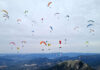
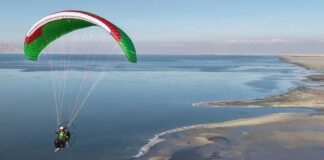
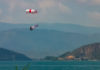
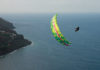
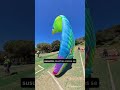
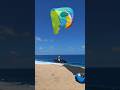
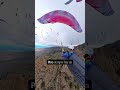
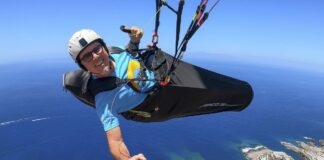
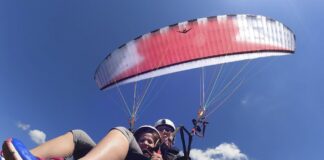
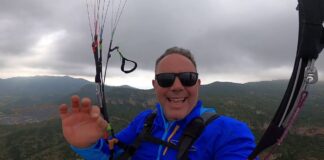
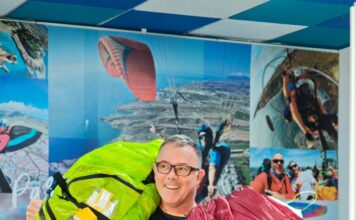
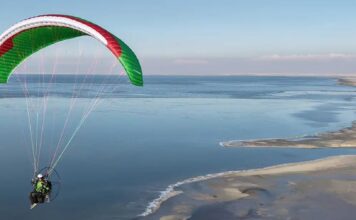
As the glider arrives at the destined part of the sky, the pilot starts a continuous commentary. B-line stall, big ears, symmetric and asymmetric collapses follow in a carefully ordered pattern. The camera follows the glider across the sky and the man seated next to the camera makes careful notes on the commentary. Acro video? No, today we are with Aerotests, the French testing house, who are now part of the FFVL and are testing the last gliders to go through the old AFNOR paraglider testing standard, before the new CEN one takes over in a few months time. The man sat next to the camera is André Rose, the Technical Officer of Aerotests. Around us on the beach at Golfe Bleu, at the far Eastern end of Monaco people walk on the beach unaware of the spectacle overhead and even a good number of the pilots either don't notice or are uninterested. Today three different models of gliders from three different manufacturers are being tested. The camera will provide independent evidence of the performance of the gliders in the tests and also of the tests being performed correctly. The three paraglider testing houses in Europe [Aerotests (FFVL), Air Turquoise (SHV) & the DHV] are preparing for the new CEN test to be implemented after a vote in 2003. A lot of new tests, development of some old ones and a lot of actual flight testing of gliders against the proposed tests have been done. Presently the issue of accreditation of testing houses is still being dealt with - the DHV have some issues outstanding with who does the tests, and the practical implementation of recognition for them under German Law. The EHPU continues to negotiate amongst all the countries on the working group to ensure that the standard now ratified in theory can make the necessary progress to be implemented and recognised in practice. Aerotests have a full calendar for ongoing CEN testing work. The testing
philosophy is simple. Gliders need to have the full normal flight
envelope tested, making sure that their behaviour in all areas conforms
to the skills of the pilots they intended for. They also need to be tested
to ensure that after incidents or departures from normal flying mode that
they recover or re-inflate and return to stable flight. Canopies intended
for beginners or low airtime pilots must do this automatically, and within
3 to 5 seconds of the pilot letting everything go, or hands up. Canopies
suited to more experienced pilots are allowed another 3 to 5 seconds in
which manufacturers instructions for pilot input can rectify the situation,
and after this they fail. In addition to this the amount which canopies
are allowed to surge or rotate after an incident is measured, this also
affects the grade or can lead to a fail. With one or two minor exceptions,
any test which leads to cascade [an induced collapse, say, leading to
another problem] will result in a fail for that canopy. Prior to all this
flight testing a load test will be performed to verify the gliders strength,
both shock and steady state loading are part of the regime. The tests grew out of two very different testing regimes, AFNOR and the DHV, with some of the best tests in either regime moved into the new one. Some of the new tests are in response to specific problems perceived with gliders, which were not revealed or prevented by the existing tests; new tests have been devised to prevent or expose these problems. The new testing regime combines the AFNOR concepts of time taken for recovery with DHV ones of amount of surge or turn caused by an incident and expectations of brake travel available before stall or spin. After the tests were complete it was possible to talk to André briefly. I asked him about the new tests. These tests are in fact just a subset of all the tests the manufacturers do in the development of their gliders. Before the commercial production of any glider, we would like to think that in addition to an in depth testing program of their own, to produce a glider they are fully happy with they would have done these tests and be sure of the results. The presentation of the glider to us allows us to check and independently verify their work and then they can place the AFNOR or CEN sticker on their glider to say it is the same as the one which passed the tests and at what level it did so. I asked him about the safety aspect of the gliders passing the new tests. Gliders which pass the new CEN tests will be safer. Gliders which used to pass AFNOR at Competition level will not get through the more stringent tests in CEN. He went to elaborate that the new tests need to go hand in hand with better pilot training and the continuous development of pilot skills as these are also part of the safety picture no level of certification can prevent pilots from flying in the wrong conditions or making the same fundamental errors of judgement that have caused accidents in the past.
In order to clarify camera evidence, wings being tested will be marked out with 25, 50 and 75 per cent of span marks to verify things like collapses and size of ears pulled. It will still be a while before you can buy a CEN certified glider. The standard has been published by all the European standards bodies, and then there will be a six month to one year period of transition, where it will still be possible to certify to the old AFNOR standard. After this the new CEN standard will be the only standard tested to. The CEN tests are a big move in harmonisation of glider testing and in the vote on acceptance all EU countries on the CEN working group were unanimously in favour. In addition to this the scheme has timetables built in for revision periodically or a mechanism for urgent change immediately if need be. Those with the thirst for more knowledge can read through the CEN Flying tests [EN 926-2, Paragliding equipment Paragliders Part 2: Requirements and test methods for classifying flight safety characteristics ] and compare and contrast the old with the new (you can download the document from this site as pdf). Or you can accept that a lot of time, energy, work and practical testing has gone into the latest tests to provide some thing good. The CEN test for parachutes is now becoming widely accepted, as it provides for a better maximum acceptable sink rate than either of the two tests preceding it. Hopefully in the not too distant future the same improvement will be true of the CEN Flight Tests for Paragliders. |
|
|||||
|
||||||
|
Home | Version 360 | Flying World | Look!| Read! | Xtras | Calendar | Links | About Us |
||||||
If
you'd like to reproduce any information or images from this website,
you must ask us at: info@ojovolador.com before
doing so. Thank you!
©
Ojo Volador 2002-2007.
All rights reserved. Please respect the rights over intellectual property.