Home | Version 360 | Flying WorldLook!| Read! | Xtras | Calendar | Links | Us

Article by Steve Uzochukwu. Photos ©: Steve Uzochukwu, Ojovolador, Porcher Industries. 2005.

Research in action
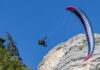
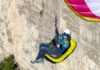
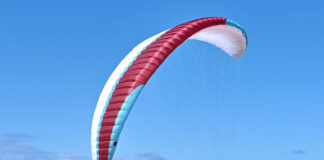
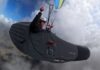
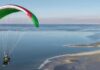
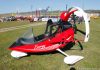
The R Team Palsecam was formed to conduct practical research about the gliders material to help improve them. The team pilots fly gliders specially made with new cloths, and study their behaviour and aging after 100 hours of use in various styles of flying (acro, competitions, XC) and different conditions of weather and launches (alpine, tropical, seaside). Every 100 hours, some of the cells are removed and taken to the laboratory at Porcher Ind., and new experimental cloth is used to replace them, as you can observe in the picture above (pilot: Charles Cazaux; glider: Gin Boomerang 4; place: La Palma island in Canarias).
Porcher is one of the partners of this pioneering project.
+Info: www.palsecam.fr


Sometimes we pilots take things very much for granted, and only on standing back can the enormity of a technical accomplishment hit home. A flying machine with no rigid structure, weighing less than one tenth of its pilot takes to the skies. The whole lifting surface is made of a material that weighs less than 50 gm/m2 [less than 2 oz/sq. yard in old money]. That material is capable of supporting a 12 G load [on a glider like the Gin Gangster] if need be, without failing, and is made of much thinner cloth than the average T-shirt. The material flies for many hundreds of hours nowadays, despite the fact that on small sites in the UK 15 years ago the airtime of similar machines was measured in minutes or single hours. Their present life runs to 5 or six years, not the two seasons we expected in 1989.

We are talking about the amazing technological achievement that is paragliding cloth. We usually ignore this technical achievement, and it only becomes a topic of conversation when a negative issue like unexpected glider demise, usually caused by porosity, comes to light. In the last two years, one of the biggest manufacturers of paragliding cloth, NCV [Nebon Carle-Vassoilles], part of French group Porcher Industries, has sought to help in the education of pilots as to how the cloth used in their gliders is made, tested, developed and needs to be cared for. NCV make the cloth colloquially referred to as "Porcher Marine" but which is known in the technical textile industry as Skytex. NCV use the name Skytex for all the cloth they make which is specially designed for use in paragliders. Reporter Steve Uzochukwu was invited to view the whole manufacturing process in a tour of NCV facilities in the area between Lyon, Chambéry and Grenoble in France.

Paragliding cloth has demanding requirements. It needs to be light, and capable of withstanding very high loads. It must not leak air, as it is air pressure that keeps the glider inflated, and generates lift. It must retain its qualities for a very long time, look nice and be as cheap as possible. When all that's said and done, we like to fold it away very tightly, without any marks or creases affecting the cloth. These demands have evolved along with paragliding itself from the first retrimmed ram air free fall parachutes, made from the zero porosity nylon of which NCV was already a manufacturer. The first dedicated paraglider makers also tried using spinnaker cloth, also made by NCV. Neither cloth was ideal for the requirements of paragliding, so these manufacturers came to NCV with a requirement for cloth specific to paragliders. NCV obliged, and they have been developing dedicated materials for paragliding ever since. This kind of specialised technical textile development is at the centre of the NCV portfolio, as they produce synthetic textiles for a wide range of applications, mostly safety based. Products that use NCV textiles include car airbags, bullet-proof vests, parachutes and spinnakers.

The overall involvement in paragliding cloth for NCV can be divided into development, production and quality control. The technical textiles market involves high levels of Research and Development, as fierce competition for market share exists. The textiles coming out of the R&D process have to be capable of mass production and delivery to tight time scales in an industry that is quite seasonal for demand. Quality control has to ensure that the product consistently achieves a certain standard, and that any finished roll of cloth can be traced all the way back through every machine used to make it and to every constituent ingredient.

To understand the production of cloth, it's easiest to follow the thread [or yarn] from its entrance into the factory to its exit into the free flying world as cloth destined for a manufacturer. At each point we can see what is happening and how the stage contributes to the properties of the finished product. We'll look at the production side of the operation first then look into how the development has led to the product we have today and its aspirations for the product of the future. After that a quick description of the quality control process will be followed by some advice from NCV about keeping our gliders in good condition by extending the life of the material they are made from.

Paragliding cloth begins its life at NCV by coming into the plant as 6.6 polyamide yarn, made by globally renowned company Du Pont [also known as Invista] and delivered on bobbins each with 550 km of thread in one continuous piece. Du Pont/Invista invented the yarn used nearly 70 years ago and christened it Nylon, its brand name to this day. 10 km of this wonder thread weighs just 33g. Each thread is made up of ten individual filaments of Nylon. The thread already contains additives to inhibit UV degradation, one of the main factors in the longevity of the finished cloth.

Weaving is a centuries old process, which involves the creation of a fabric from the interlacing of yarn. Originally done by hand, the mechanisation of weaving in the 18th and 19th centuries revolutionised the creation of fabrics, allowing huge amounts to be made in a very short time and space with very little error or imperfection in the finished product. Just as well, as a paraglider averages just under 30m2 on both top and bottom surfaces, with a finished glider consuming about 100 m2 of cloth after ribbing is taken into account.

The process starts in the creation of a master beam 10,000 threads wide, across which the looms will thread the filling yarn to produce the finished cloth.

To create the master beam, sub beams of 1,000 threads wide are created first. 1,000 bobbins sit on the creel and the sub beam is wound from these, and it is at this point in the process that the yarn is laser examined to check the integrity of the thread and to log breaks in the individual filaments.
Yarn being combined into the sub beam from which the main beam is made.
 
Let's talk about some terms here, as they are needed for the rest of the explanation of the process. The direction of the threads in the beam, which is the same as the direction along the finished roll of cloth [lengthways], is called the warp direction. The filling yarn, which is the thread that goes across the finished roll of cloth [widthways], does so in the weft direction. Cloth manufacturers quote the strength/elasticity of the cloth in both these directions. They also quote strength & stretch in another direction, the bias, as the direction at 45 degrees to both warp and weft.


Main beam creation from sub beams.


The first time a particular batch of cloth is made to a certain weave all the threads [10,000 in all] are manually inserted into the needles on the loom. It's at this stage that the actual detail of the weave is incorporated into the cloth. Ripstop is actually a weaving pattern, created by breaking up the alternation of one thread under the filling yarn, and one over. This results in a double or triple thread at regular intervals, causing a bunching or ruching of the cloth as an object tries to cut or tear through it and preventing the propagation of the tear. Ripstop offers improved resistance to tearing without the penalty of a heavier cloth.

Looms can use a traditional needle [a shuttle] to pass the filling yarn through the beam, or more recently use either a jet of air or water to thread the filling yarn.


Skytex is woven by the air jet method. All Skytex cloths use 10,000 threads in the warp direction, and the weight of the cloth is decided by the packing density of the filling yarn.
The cloth produced comes in four weights at the end of the weaving process, Skytex 36, 40, 45 and 55. All these numbers refer to the weight per square metre, and the 36 and 40 will be sold as 9017, with the 45 being referred to as 9092 and the 55 as 9112. The weights of the cloths and the coatings they come with are summarised in the table.

The cloth is wound onto a master roll at the end of the weaving process. At this point the raw cloth, known as greige material has no colouring, and allows air to pass through it. It needs to be dyed. Even white material requires dyeing, and it must be washed first to remove any residue from the weaving process. It then undergoes the colouring process after which the dye must be fixed. Colours are chosen by NCV for their UV stability, and great strides have been made in this area with colours like black or some reds that were unusable for paragliding cloth ten years ago now being both suitable for use and amongst the most UV resistant colours. The dyeing process improves the durability of the cloth and contributes to its dimensional stability.
White cloth makes up about 50% of the total sold. White and the other colours are made in batches, with a washing process followed by dyeing and fixing. After the fixing process, and a check to see that the colour has become fast, the material passes through an oven to further fix the dye and to dry out the cloth. The rolls of cloth, now with the colour needed but without any coating, undergo vigorous quality control for defects in the physical nature of the material itself as well as the consistency of the colour. A lot of this quality control is of a manual nature, as most automatic scanning processes do not work well with ripstop material. Samples of material undergoing testing in the laboratory do so in an environment carefully controlled for temperature and humidity 24/7, with the samples being taken into that environment at least 24 hours before any test is performed.

The rolls of cloth now leave for Griffendux, another Porcher Company across the road from NCV. Griffendux is also part of the NCV Technical Textiles division and their role is to coat the cloth, and the coating gives the cloth a number of qualities that will change it very significantly.

The cloth is very strong in the directions of warp and weft, as pulling in either of those directions engages threads that go across or along the cloth. In both directions the threads of the yarn resist any deformation directly. However, if we pull hard on the bias, the resulting strain relies on the weave rather than the threads directly, and it tends to deform more in this direction. Also, the cloth allows air to pass through it relatively easily, which for paragliding is useless. The addition of a coating to the cloth does two major things - it makes the cloth far more resistant to elongation or deformation on the bias, and it makes the cloth airtight. The coating also has the ability to reduce the effects of ageing on the cloth, allowing it to retain tear strength and resistance to stretching despite exposure to sunlight and thousands of loading and unloading cycles. NCV specify different coatings for different areas of use in a paraglider, with four main types being used: Firm, Medium, Water repellent and Medium Mark 2.

Washing and dyeing machine


After all this effort to make top quality cloth, NCV have some advice for pilots on how to keep their gliders in top condition:

· Avoid all unnecessary exposure to sunlight - put your wing away when not in use.

· Don't drag your wing over the ground or tread on it.

· Don't fold your wing too tightly and be sure to fold the leading edge as per instructions.

· Check when folding away your wing for insects or other foreign bodies and don't leave them in the wing.

· Leaving your glider locked away in a car boot in strong sunlight can lead to extremes of heat reducing the life of the wing significantly.

· Only fold your wing away when it is completely dry, and store it in a cool, dry place with the bag open.

· To clean your glider, spread it out on a clean, dry surface, and use Savon de Marseille [or similar olive oil based natural soap] and a wet sponge. Do not use abrasives or solvents.


The NCV web site can be found at:
www.ncv.fr

*The author of this article, Steve Uzochukwu (UK), is a Freelance Broadcast Technician, free-flyer of different aircrafts and occasional writer for Skywings and Cross Country magazines.
You can visit his website: www.steveu.org

Firm [E29A]
This coating has strength and low elongation as the priorities, because it is used for ribs. These qualities can be optimised at the expense of porosity and abrasion resistance, as the ribs never come in contact with the ground nor are they responsible for air retention.

Medium [E38A, E68A]
This is a medium finish coating used for cloth destined for both upper and lower surfaces, and some use in ribs, usually the lighter unsuspended ones. This coating has to be good in all areas, considering the amount of UV exposure and contact with the ground the cloth may have. E68A coating is slightly lighter than E38A [36gm/m2 v 40gm/m2] because of additional processing on the cloth, hence the choice of E68A as the finish for the 9017 cloth for a mountain glider like the Gin Yeti.

Water repellent [E77A]
Another coating for general use in the upper and lower surfaces, with the added quality of being water repellent.


All the above coatings are applied to the cloth in a process that uses organic solvents.

Medium Mark 2 [E85A]
This is a new coating developed over the past 4 years by NCV. It combines the need for longer life and resistance to all forms of degradation with the mandate coming from the European Union for all industrial processes to be more environmentally friendly. To satisfy the green requirement, this coating uses a water based rather than an organic solvent application process. This new coating vastly improves the life of cloth it is applied to. Resistance to UV degradation and performance in washing/flutter tests also show a great step forward. A comparison for the new coating compared to the old can be seen in the graph for flutter and washing/tumbler tests on the left. This coating is used on cloth in Aerodyne, UP, Gin and FreeX gliders.

All the coatings are applied by a process using a reservoir of the coating dissolved in solvent as the cloth passes by a sharp edge, resulting in a layer of coating a few microns thick. The coated cloth is then blown dry to remove the solvent and the finished paraglider cloth is ready. The last two checks involve the use of a fabric table to check the cloth for flatness and uniformity and then a visual check for defects.

The paragliding cloth produced by NCV has not got to the stage that it is at now without a lot of Research and Development. The constant demands coming from the manufacturers ask for cloth that is longer lived, lighter, stronger and cheaper. This involves constant development of yarns, weaving methods and coatings which undergo standard tests including measurement of elasticity, elongation, and tear strength. Other tests more specific to paraglider cloth include such harsh measures as constant exposure to very high intensity UV light, repeated washing in a machine, scrubbing and a flutter test where the cloth is artificially fatigued on a small windmill at 90 km/h.

Even when a new coating, for instance, offers advantages over existing ones that coating must be integrated into the manufacturing process in such a way that it can be produced reliably and economically to the existing quality standards or higher. At the moment the new E85A coating is generally only offered on 45 gm/m2 [9092] cloth, but at extensive testing programme is ongoing to finalise the large scale manufacture of the lighter 9017 cloth with the new coating. One of the launch customers for the 40gm/m2/E85A based cloth has been Nova, who have used it for the undersurface of the Syntax and are going to use it for the whole body of the mountain version of the same glider. New fabrics are constantly being developed by NCV R&D engineers. There is definitely a trend towards lighter and lighter fabrics. This year, for the first time since the release of the 40gm/m2 cloth 5 years ago NCV has sold more Skytex 40 than Skytex 45.

Quality control is also embedded into the manufacturing process. Direct examination of the product at key stages is combined with the taking of samples to test to destruction in the laboratory. At every stage a series of numbers on the product allow a complete trace of the product path back to every constituent ingredient used and every person or machine involved. A sample of every roll of cloth leaving the factory is archived. NCV point out that with some 80% of their material being used in safety applications, a reputation for quality is essential to their continued status as a market leader in the technical textiles field.

Home | Version 360 | Flying World | Look!| Read! | Xtras | Calendar | Links | Us

All the information and images published in this website are property of Ojovolador.com unless stated otherwise.
Reproduction of any part of these contents (info, graphics & pictures) by other website or media is strictly forbidden,
unless specially authorized by Ojovolador.com.

If you want to share this information, please pass the Web address (URL) of this page.

© OjoVolador 2002 – 2007

All rights reserved. Please respect the rights over intellectual property of this Website.


Ojovolador.com
Email: info@ojovolador.com
Tel.: +34 920378503
Lanzahita (Avila) - ESPAÑA

Top Paragliding Sites