Trending Now




PARAGLIDING

Record-breaking X-Alps ended after 13 days with Chrigel Maurer champion for...
The world’s toughest adventure race has come to an end with the clock officially stopped at 11:30am on Friday June 23, just a few hours after Japanese athlete Emoto Yuji became the 23rd athlete to make goal. It’s been a historic and record-breaking edition of the Red Bull X-Alps, with Chrigel Maurer champion for the 8th consecutive time.

Maxime Pinot leads France to victory at Paragliding Worlds
The 18th FAI World Paragliding XC Championships had 9 valid tasks flown in different conditions in the Alps, from Chamoux sur Gelon. In total...





- Nuestros patrocinadores -







PARAMOTOR

Paramotor paraglider Vantage 4: GIN promises adventure performance with its new...
The fourth generation of the wing aimed at beginner and intermediate paramotor pilots offers very easy takeoff, as well as high-speed performance and direct and precise handling, according to the Korean manufacturer.

Flights and thrills at the 23rd FIA El Yelmo.
FIA El Yelmo successfully closed one more year as the great flying event in Spain, an edition that was filled with shows and thrilling times.


Sponsored contents

Why you should never wet your reserve, unless it is made...
- Is there an issue with reserve parachutes that get wet?Yes – however not on every reserve. But there is definitely a big issue...
OUR BLOGS





OJOVOLADOR'S CHOICE






De Piedrapentes a Parapentes.
01:02

Pilotaje proporcionado #parapente mano de hierro con guante de seda 😜
01:20
Ladera de Ma, mis tres reglas de Oro.
01:10

Cessna Vs Parapente en los Alpes, ¿milagro o negligencia? #parapente #accidente #cessna
02:52

Giro Contra Ladera y la adolescencia parapentista
02:56
Vuela mejor en Parapente, Practica más control de campana Groundhandling
02:40
¿Estres o Libertad?#parapente #pajarera #gagle #bgd #bgdcure3
00:45

Pilotaje activo parapente: ¡Evita el 99% de las plegadas! #adrenalina #parapente #paragliding
02:18
🪂 Aterrizar - EL BROCHE DE ORO 🏅
00:53

Espectro de Brocken
00:28
REVIEWS
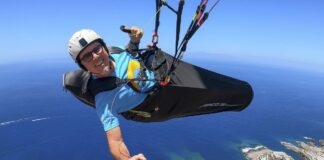
Test: Kitto, the new ultralight pod harness by Apco.
New Kitto harness by Apco for the ultralight segment, conceived for H&F and cross country flights with a very competitive price.
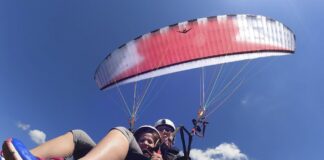
Testing Wintech´s Rubi 3 tandem paraglider.
Unboxing and product-test video-report made by Daniel Crespo for Ojovolador of the Rubi 3, the tandem paraglider of Windtech.

Video: Training accuracy with the Magic by BGD
We test-tried BGD's high-end EN A paraglider Magic, both as an entry-level wing as well as for its alternative use as specific for accuracy comp. We did a couple of test flights with it in Tenerife, Spain and then went to compete to the Spanish Precision Championship at Alforja, where we completed our impressions of the Magic for this modality in this video report.





- Nuestros patrocinadores -